ABG All Board Games
Cups box art

Cups

Players

2

Time

?-?

Age

8+

Weight

2

Rating

5.50

Fit

Teach 2.4

Teaching signal

Replay 3.9

High replayability

Interaction 3.7

Highly interactive

Scaling 4.5

Scales well

Strategy 4.7

Deep strategy

Control 2.5

Luck-sensitive

Table feel

Moderate level of direct and strategic confrontation with high interaction frequency, but low emphasis on cooperation.

Replay value

Cups offers a high level of variability with its gameboard, allowing for different experiences each time it is played. The availability of expansions adds to the replay value, providing new content and gameplay elements. The game also offers deep strategic possibilities, allowing players to improve their strategy over time. The player interaction score is average, and the game scales well with different numbers of players. While the easiness to learn score is relatively low, indicating a moderate learning curve, the game offers enough depth to compensate. Overall, Cups has a strong replayability score of 7.84.

Luck profile

Cups has a moderate influence of luck. The game outcome is determined by a balanced mix of random elements and player strategy. While random elements like dice rolls or card draws play a notable role, players also have substantial ability to mitigate the effects of luck through strategic decisions and planning. Overall, Cups offers a good balance between luck and strategy, making it an enjoyable game for players who appreciate both elements.

Overview

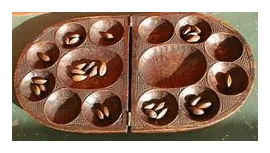
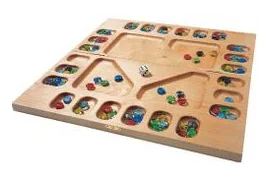
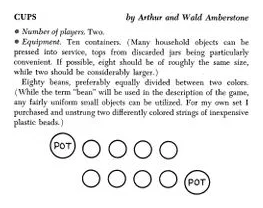
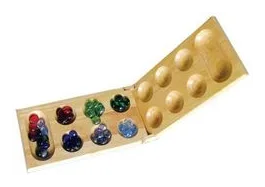
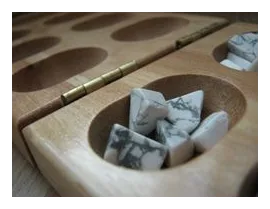
Cups is a modern member of the mancala games family and was developed by Arthur and Wald Amberstone of the New York Game Associates and published by Sid Sackson in A Gamut of Games. Each player is given four cups, one pot and 40 beans. Players take turns placing one to four beans sequentially in their cups, beginning with the cup on the left and moving towards their pot on the right. Only if the last bean will land in the pot, a player may pick up all beans from a cup instead, and sow these. Whenever the last bean is placed in an empty cup, beans in the opponent's adjacent opposite cup are captured (to the pot). The player with most beans in the pot at the end of the game wins.
Media

No media imported yet.

Editions

Edition Year Language Publisher / Region
No editions imported yet.

Files

No files imported yet.

Commerce

No commerce mappings imported yet.

Credits

Designers

2
Wald Amberstone Arthur Amberstone

Publishers

4
Dover Publications dtv (Deutscher Taschenbuch Verlag) Hugendubel Verlag Hutchinson

Linked items

No linked items imported yet.