Overview
At a glance
Is this game right for my group?
ABG editorial scores on a 1–5 scale.
Highly interactive
How it plays
How does it play?
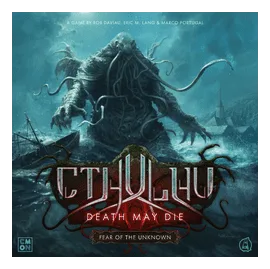
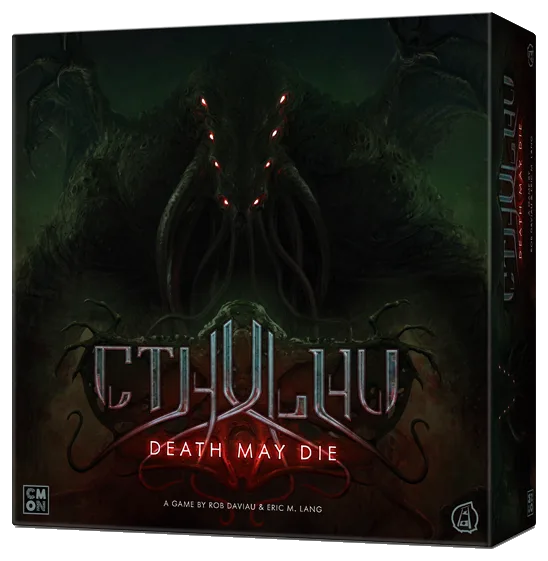
In Cthulhu: Death May Die, inspired by the writings of H.P.
Core mechanisms
Key systems that shape the decisions players make.
Action Points
Spend a limited allowance of points across several possible actions each turn.
Scenario Campaign
Play linked or standalone scenarios with their own setup, objectives, and consequences.
Cooperative Game
Players coordinate their actions toward a shared objective and win or lose together.
Dice Rolling
Roll dice to introduce uncertainty into actions, production, movement, or resolution.
Variable Player Powers
Each player has different abilities, restrictions, or strategic advantages.
Solo / Solitaire Game
Provide rules and objectives designed for a single player.
Read the full game description
In Cthulhu: Death May Die, inspired by the writings of H.P. Lovecraft, you and your fellow players represent investigators in the 1920s who instead of trying to stop the coming of Elder Gods, want to summon those otherworldly beings so that you can put a stop to them permanently. You start the game insane, and while your long-term goal is to shoot Cthulhu in the face, so to speak, at some point during the game you'll probably fail to mitigate your dice rolls properly and your insanity will cause you to do something terrible — or maybe advantageous. Hard to know for sure. The game has multiple episodes, and each of them has a similar structure of two acts, those being before and after you summon whatever it is you happen to be summoning. If any character dies prior to the summoning, then the game ends and you lose; once the Elder One is on the board, as long as one of you is still alive, you still have a chance to win. The episodes are all standalone and not contingent on being played in a certain order or with the same players.