Overview
At a glance
Is this game right for my group?
ABG editorial scores on a 1–5 scale.
Harder to teach
High replayability
Highly interactive
Scales well
Deep strategy
How it plays
How does it play?
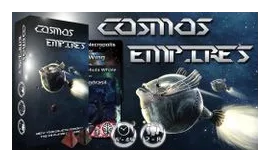
Cosmos: Empires is a 2-8 player, 15-45 minute engine building card game. Jump into the galaxy, choose your strategy and build your galactic empire.
Core mechanisms
Key systems that shape the decisions players make.
Action Points
Spend a limited allowance of points across several possible actions each turn.
Income
Receive recurring resources according to your position, assets, or development.
Dice Rolling
Roll dice to introduce uncertainty into actions, production, movement, or resolution.
Investment
Commit resources now to improve income, control, or value later.
Neighbor Scope
Effects apply only to adjacent players, regions, or positions.
Read the full game description
Cosmos: Empires is a 2-8 player, 15-45 minute engine building card game. Jump into the galaxy, choose your strategy and build your galactic empire. Race against your friends, exploiting their economy to your advantage! The game is played with a single deck, from which 10 cards are drawn into the “pool” players can select and build cards from. Each card has a cost, roll value and production value. Each turn, the current player gets 2 actions and then rolls 2 D4 (4 sided dice). The current player can use one of their actions to increase or decrease the total of the two dice by one. Then, each player with a card with a Roll value equal to the new total gets Credits equal to the same cards production value. Finally, the current player can use their remaining actions to build a card from the card pool (or “cycle” it and take credits). —description from the publisher