Overview
At a glance
Is this game right for my group?
ABG editorial scores on a 1–5 scale.
Harder to teach
High replayability
Highly interactive
Scales well
Deep strategy
How it plays
How does it play?
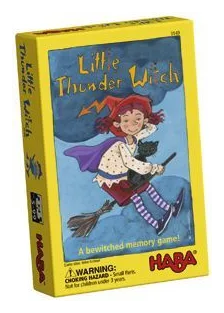
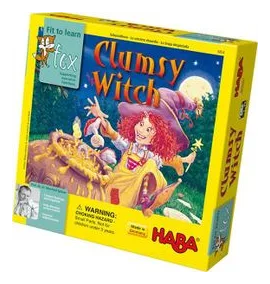
The Clumsy Witch has brewed ten potions. Each potion contains twelve ingredients - but unfortunately, she forgot one ingredient in each potion and put one in twice.
Core mechanisms
Key systems that shape the decisions players make.
Read the full game description
The Clumsy Witch has brewed ten potions. Each potion contains twelve ingredients - but unfortunately, she forgot one ingredient in each potion and put one in twice. The potions (large tiles) are placed on the track on the game board, the witch is put anywhere between two potions. Now a die is rolled. It determines how many steps the witch should go forward - but she doesn't actually move. Instead, each player calculates in his/her head where she should land, then looks at the next potion. The first player who can tell which ingredient is missing scores a point. When the players are familiar with the system, various difficulty levels can be added by rolling more than one die: - One die to determine the movement direction - One die to determine whether the witch looks in the cauldron ahead or the one behind - One die to determine whether the witch is used or the fox - who always does the opposite of what the dice say (including finding out which ingredient is used twice instead of missing) The more dice are in play, the trickier it is. Another way to increase the difficulty is to use the dice cup and only leave the dice visible for a short moment. The first player to collect a certain number of points is the winner. (User summary by HilkMAN)