Overview
At a glance
Is this game right for my group?
ABG editorial scores on a 1–5 scale.
Harder to teach
High replayability
Highly interactive
Scales well
Deep strategy
How it plays
How does it play?
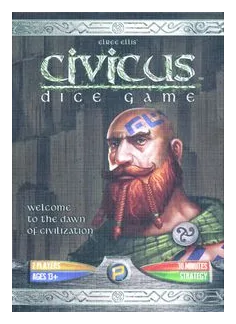
In this two player game, the players find themselves submerged in a visually stunning, abstract world of epic high fantasy; a vast and expansive world, set at the very dawn of civilization.
Core mechanisms
Key systems that shape the decisions players make.
Read the full game description
In this two player game, the players find themselves submerged in a visually stunning, abstract world of epic high fantasy; a vast and expansive world, set at the very dawn of civilization. As newly ascribed tribal leaders, the players are challenged with all of the difficulties which burden any great leader --Where to call home...who to conquer...when to make peace... Civicus Dice Game is a civilization-themed, strategic area-control game of thoughtful settlement placement and fateful dice rolls. Players take turns placing and developing settlements in order to claim a variety of domains and their respective advantages. In order to secure victory, the players must cultivate a well balanced nation. One rich in technology, settlements & farms, markets & exotics, as well as, temples & sacred sites. Specifically, the players claim domains by building camps, upgrading those camps to villages, and ultimately into great cities. The various settlement types project varying degrees of influence over the domains. By controlling the domains,the players will earn a number of different victory point multipliers (including farms, markets, temples, and sacred sites). In addition the players will use their settlements to control three kinds of resource dice (forest, mountain, and desert dice). Each respective dice type offers a unique set of odds for resource procurement (forest dice offer much wood, some clay, and an occasional exotic good; mountain dice offer much stone, some metal, and an occasional exotic good; finally desert dice offer equal odds of wood, stone, clay, and metal, with a greater chance for exotic goods. Throughout the game, the players will strive to attain victory points on 4 tracks: Subsistence (farms x settlement score [village = 1, city = 3]). Commerce (markets x exotics) Theology (temples x sacred sites) Technology (single score, no multiplier) Over the course of six rounds of scoring (six generations), the players will compete for the highest final score.