Overview
At a glance
Is this game right for my group?
ABG editorial scores on a 1–5 scale.
Harder to teach
High replayability
Highly interactive
Scales well
Deep strategy
How it plays
How does it play?
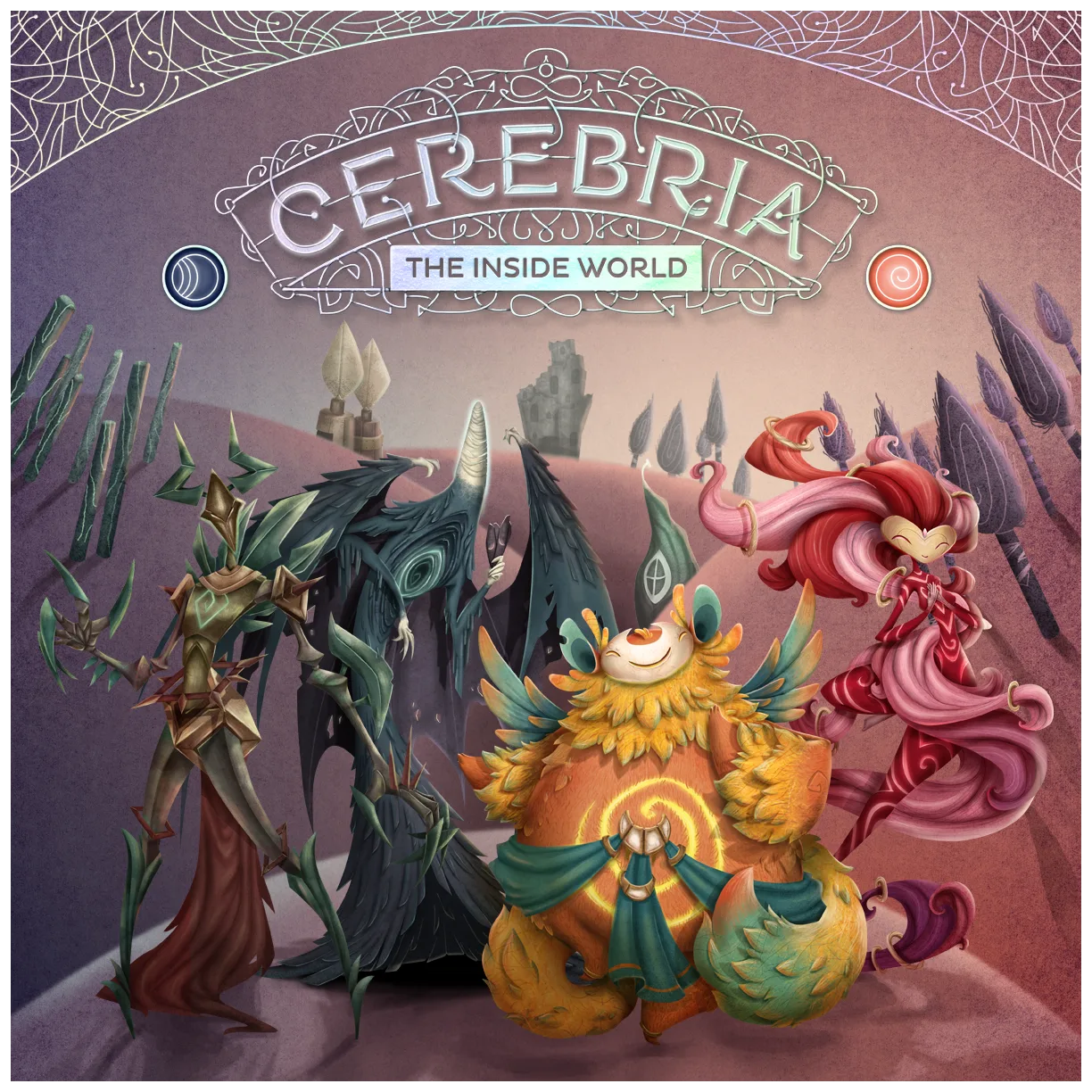
Cerebria is a dynamic, team-based, objective-driven area control game, where players play as Spirits, powerful entities representing Bliss or Gloom.
Core mechanisms
Key systems that shape the decisions players make.
Action Points
Spend a limited allowance of points across several possible actions each turn.
Area Majority
Compete to have the strongest presence in areas that award control or points.
Cooperative Game
Players coordinate their actions toward a shared objective and win or lose together.
Deck Construction
Build a deck before play by selecting cards under defined construction rules.
Hand Management
Time and sequence a limited hand of cards to preserve future options.
Read the full game description
Cerebria is a dynamic, team-based, objective-driven area control game, where players play as Spirits, powerful entities representing Bliss or Gloom. These opposing forces - the two sides of human nature - struggle to control and shape the Inside World, the metaphorical representation of an evolving personality. Cerebria introduces a unique theme and numerous innovative mechanisms. The game is centered around the player-controlled Spirits, and the Emotion cards controlling Cerebria’s areas, each with their own stats and abilities. The Spirits can perform up to three actions on their turn. These include moving between Cerebria’s Realms and Frontiers, using the specific powers of the Realms, invoking and upgrading Emotion cards, removing opposing Emotions, and building Fortresses to consolidate their influence on certain areas. The Actions cost Willpower, gained primarily by absorbing from the Origin’s Spheres in the middle of the board. Both Bliss and Gloom also have a rare shared team resource, Ambition, enabling them to use the game’s most powerful effects. The teams can score points either by accomplishing publicly known minor objectives (the Intentions), or completing their major objectives (the Aspirations), which change dynamically during the course of the game. Scoring Aspirations allows players to add Bliss and Gloom Fragments to the Identity, built in the middle of the board. These are key moments in the game: Cerebria’s state is in constant flux, but the Fragments are permanent imprints of a game state during the scoring events. The game is won by the side with more influence over the finished Identity, thus becoming the dominant force in Cerebria.