Overview
At a glance
Is this game right for my group?
ABG editorial scores on a 1–5 scale.
Harder to teach
High replayability
Highly interactive
Scales well
Deep strategy
How it plays
How does it play?
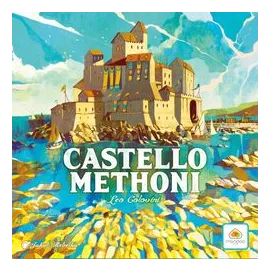
During the Byzantine years, Methoni retained its remarkable harbor and remained one of the most important cities of Peloponnese. The Republic of Venice had its eye on Methoni since the 12th century, due to its location on the route from Venice to the Eastern markets.
Core mechanisms
Key systems that shape the decisions players make.
Read the full game description
During the Byzantine years, Methoni retained its remarkable harbor and remained one of the most important cities of Peloponnese. The Republic of Venice had its eye on Methoni since the 12th century, due to its location on the route from Venice to the Eastern markets. Rich Venetian traders started to expand their territories with power and money to be a lord of Methoni which must be the promised most powerful throne. In Castello Methoni, players attempt to take over castles, but with money, not military power. On a turn, a player plays a card of a certain terrain, builds a wall on the corresponding place, then places one of their houses and one other house on each side of the wall. When an area is closed by walls, it becomes a domain. When a player builds a domain, then they pay money to the players who have a house in the area. When a player builds a domain adjacent to another domain, they can merge the domains by paying money. The game ends when no more walls remain in the supply. The player who has collected the most points from coins and domains wins. —description from publisher