Overview
At a glance
Is this game right for my group?
ABG editorial scores on a 1–5 scale.
Easier to teach
High replayability
Low interaction
Scales well
Deep strategy
More strategic control
How it plays
How does it play?
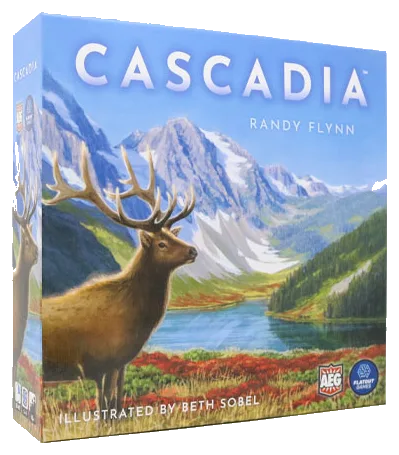
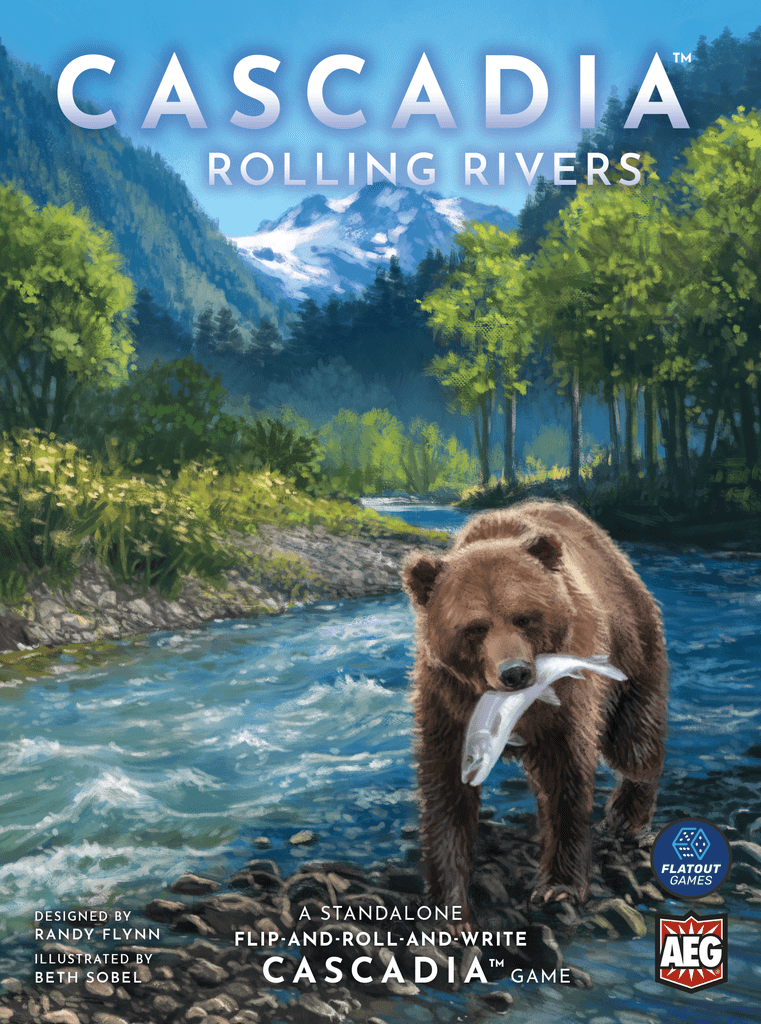
Roll wildlife dice, claim animals, complete habitat cards, and fill a riverine Cascadia map with linked habitats and scoring combos.
Core mechanisms
Key systems that shape the decisions players make.
Dice Rolling
Roll dice to introduce uncertainty into actions, production, movement, or resolution.
Contracts
Complete specific requirements to earn rewards, income, or victory points.
Line Drawing
Draw lines to connect, divide, trace, or claim parts of the play area.
End Game Bonuses
Earn additional points for meeting conditions evaluated when the game ends.
Hexagon Grid
Use a hexagonal map where each space connects evenly in six directions.
Read the full game description
Cascadia: Rolling Rivers turns the landscapes and wildlife of Cascadia into a simultaneous flip-and-roll-and-write puzzle. Each round, players use shared wildlife dice to collect animals, spend them to complete habitat cards, and mark connected spaces on one of four riverine environment sheets. Special actions let you manipulate dice or stretch resources, while completion cards reward carefully timed chains of discounts and bonuses. Every map introduces its own spatial rule, and the central special die changes the rhythm of the round. The compact structure keeps everyone playing at once, yet the mix of habitat planning, resource timing, and variable scenarios creates a satisfying arc across twenty rounds. Rolling Rivers stands alone for one to four players and can be combined with Rolling Hills for groups of up to eight.