Overview
At a glance
Is this game right for my group?
ABG editorial scores on a 1–5 scale.
Harder to teach
High replayability
Highly interactive
Scales well
Deep strategy
How it plays
How does it play?
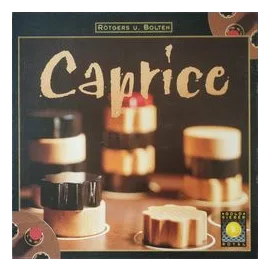
This is an abstract strategy game with very nice wooden components. It is a part of the same series or games as Cabale and Siesta.
Core mechanisms
Key systems that shape the decisions players make.
Read the full game description
This is an abstract strategy game with very nice wooden components. It is a part of the same series or games as Cabale and Siesta. Players begin with four hidden tiles that have pictures on them matching block types (in two shapes and two colors). Players take turns adding and possibly moving blocks on a board, each turn adding to one of six towers, to a maximum or four blocks per tower. The players are trying to build towers with pieces that match their tiles. When five towers reach their maximum height, players arrange their tiles so as to match as many towers and blocks as possible.