Overview
At a glance
Is this game right for my group?
ABG editorial scores on a 1–5 scale.
Harder to teach
High replayability
Highly interactive
Scales well
Deep strategy
How it plays
How does it play?
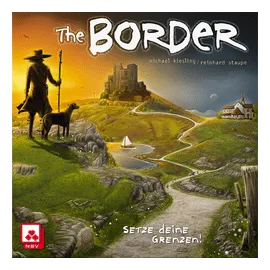
Your goal in The Border is to surround as many areas as possible as quickly as you can. Each player has an erasable game board that features nine areas, with each area being surrounded by a path of hexagons and with these hexagons being grouped in six colors.
Core mechanisms
Key systems that shape the decisions players make.
Read the full game description
Your goal in The Border is to surround as many areas as possible as quickly as you can. Each player has an erasable game board that features nine areas, with each area being surrounded by a path of hexagons and with these hexagons being grouped in six colors. Most of these paths border two areas. Two hexagons are white and contain an X mark. On your turn, you roll five dice up to three times, keeping and re-rolling dice as you wish. Each die has a different color on each of its six sides. Once you stop, you can use the die results to X spaces on your game board, but only if you can X off all the spaces in that group. If you roll four orange and one red, for example, you can X off a group of two, three, or four orange hexagons, but not a group of five orange hexagons since you have only four orange on the dice. After you take your turn, each other player can X off one space on their game board for each die that you didn't use on your turn — but only if those spaces are adjacent to ones that are already Xed. If you marked off a group of three orange hexes, for example, then each opponent could mark off one orange and one red, assuming they are adjacent to previously marked spaces. When you mark off the final hex that borders an area, you score that area, earning 4-12 points depending on its size. Any other player who surrounds that area on a later turn receives only half as many points. As soon as a player completes their sixth area, you finish that turn, then everyone sums their points to see who wins.