Overview
At a glance
Is this game right for my group?
ABG editorial scores on a 1–5 scale.
Harder to teach
High replayability
Highly interactive
Scales well
Deep strategy
How it plays
How does it play?
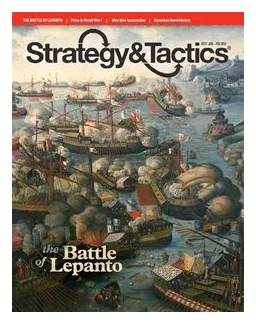
The Battle of Lepanto is a two-player or multi-player (Ottoman versus Christian) operational level game, designed by Robert Cowling.
Core mechanisms
Key systems that shape the decisions players make.
Read the full game description
The Battle of Lepanto is a two-player or multi-player (Ottoman versus Christian) operational level game, designed by Robert Cowling. The game includes 280 die-cut counters, with the each warship chit representing two ships per counter; there are three primary ships types: Galleys, Galliots and Galleasses, each with different capabilities. The colorful map features the Ionian Sea, printed with the historical set up of both sides just as the two opposing fleets were arrayed to begin battle, as well as various charts and tables for easy reference during play. The land area featured represents the peninsular areas of the Grecian mainland. The rules entail a variety of mechanics pertaining to 16th century naval combat, such as Wind Direction, Ramming, Boarding, Small-Arms Fire, Gunnery Ranges, Exhaustion, Galliot Shoreline Movement, Christian Small-Arms Advantages, Ottoman Maneuver Advantages, as well as the designations of the historical admirals in the battle, such as Don Juan, Ali Pasha, etc. The easy and quick game sequence is as follows: Movement Combat Reorientation Movement is regulated in terms of the front and back side of each warship chit. As each ship completes its movement, it is flipped from its A (Alpha) side over to its O (Omega) side (or vice versa, if they began the turn on their Omega sides). When all desired moves have been completed, the player’s remaining ships are also flipped to their O (Omega) side (or vice versa, if they began the turn on their Omega sides) to indicate the end of the entire Movement Phase. In this way, players may easily keep track of which ships have moved, and which have not, during each game turn. Victory in the game is determined by the accumulation of VPs for eliminated and damaged ships that have been inflicted by each side.