Overview
At a glance
Is this game right for my group?
ABG editorial scores on a 1–5 scale.
Harder to teach
High replayability
Highly interactive
Scales well
Deep strategy
How it plays
How does it play?
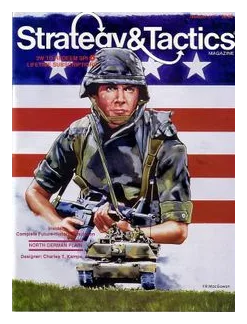
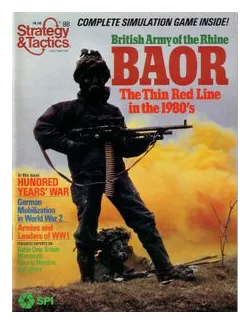
"BAOR - British Army of the Rhine - The Thin Red Line in the 1980's" is one of several games in the Central Front Series published by SPI in the 1980s. "BAOR" appeared in the September/October 1981 issue of Strategy & Tactics magazine #88.
Core mechanisms
Key systems that shape the decisions players make.
Read the full game description
"BAOR - British Army of the Rhine - The Thin Red Line in the 1980's" is one of several games in the Central Front Series published by SPI in the 1980s. "BAOR" appeared in the September/October 1981 issue of Strategy & Tactics magazine #88. Both the game and series depict the early days of World War III in West Germany. Combat is conducted at the company, battalion, and regiment level, with a map scale of 4 km per hex. The map covers the BAOR sector and includes the major West German cities of Hannover and Kassel. Fifth Corps uses a collection of mechanics, including "Operations Points" and "Friction Points", variable length game turns, and Zones of Control to simulate modern battlefield conditions. As with most modern warfare games, Fifth Corps includes rules for airpower, Airmobile operations, and nuclear/chemical warfare. The game contains two scenarios. "The Thin Red Line" is the campaign scenario, covering the first five days of the war in the BAOR sector. "The Race to the Weser" covers the first 60 hours of combat in the region between Hannover and Kassel.