Overview
At a glance
Is this game right for my group?
ABG editorial scores on a 1–5 scale.
Harder to teach
High replayability
Highly interactive
Scales well
Deep strategy
How it plays
How does it play?
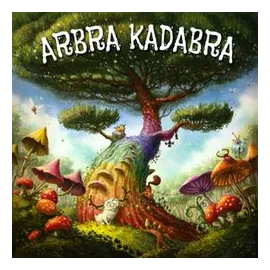
You are in the enchanted forest, and you must leave before night. The magic tree stands in the middle of the forest.
Core mechanisms
Key systems that shape the decisions players make.
Read the full game description
You are in the enchanted forest, and you must leave before night. The magic tree stands in the middle of the forest. It is a multi-colored tree that you may grow or shrink, and you must overcome its challenge to escape. Specifically, you have to insert all your wooden pieces in the tree trunk and capture a precise number of your opponents' trunk pieces. Be smart and skilled, and you will succeed. Otherwise, you will turn into a mushroom and spend one thousand years near the tree with all the ones who missed before you! All players start Arbra Kadabra with ten wooden trunk pieces in your color, with the die (showing 1/1/2/2/3/3) and the base of the tree in the center of the table. On a turn, you roll the die, then either add a number of pieces to the tree or remove a number of pieces to the tree equal to the number that you rolled. (If the tree is too short to take pieces, then you must add them.) When you add pieces to the tree, you must add pieces of your own color first. Once you have no more pieces of your color, you can instead place pieces of other players' colors. Why would you have pieces of their color? Two reasons: (1) When you remove pieces from the tree, you must take them from the top down; you can't remove pieces from the center of the tree. (2) If the tree collapses on your turn, then you must take all of the pieces that fell and add them to your collection. What are you trying to do with all this building and unbuilding? To win the game, you must have none of your own pieces in front of you. In addition, you must have exactly four of the opponent's pieces in a two-player game, exactly three of each opponent's pieces in a three-player game, or exactly two of each opponent's pieces in a four-player game. Do this first, and you win!