Overview
At a glance
Is this game right for my group?
ABG editorial scores on a 1–5 scale.
Harder to teach
High replayability
Highly interactive
Scales well
Deep strategy
How it plays
How does it play?
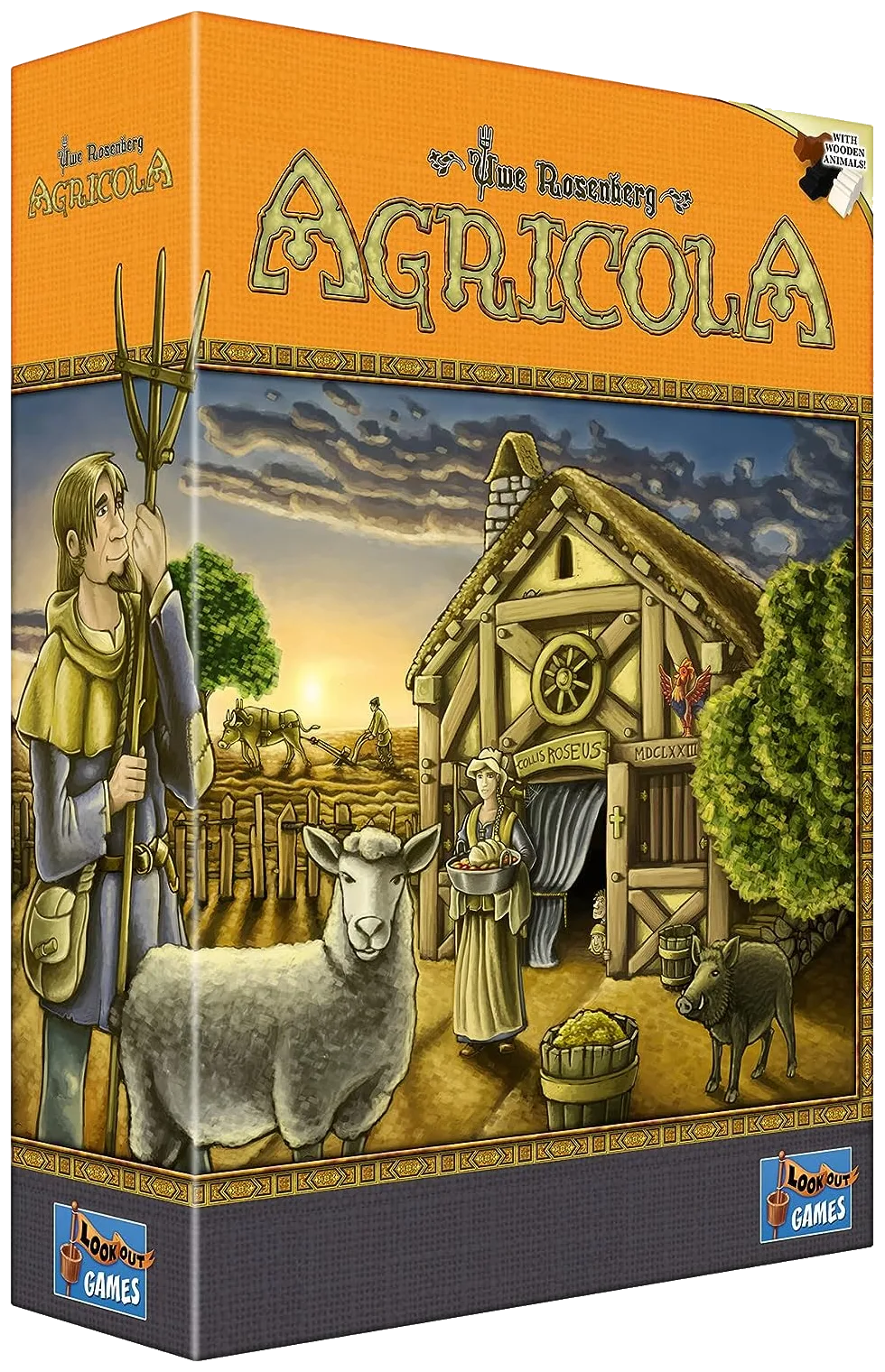
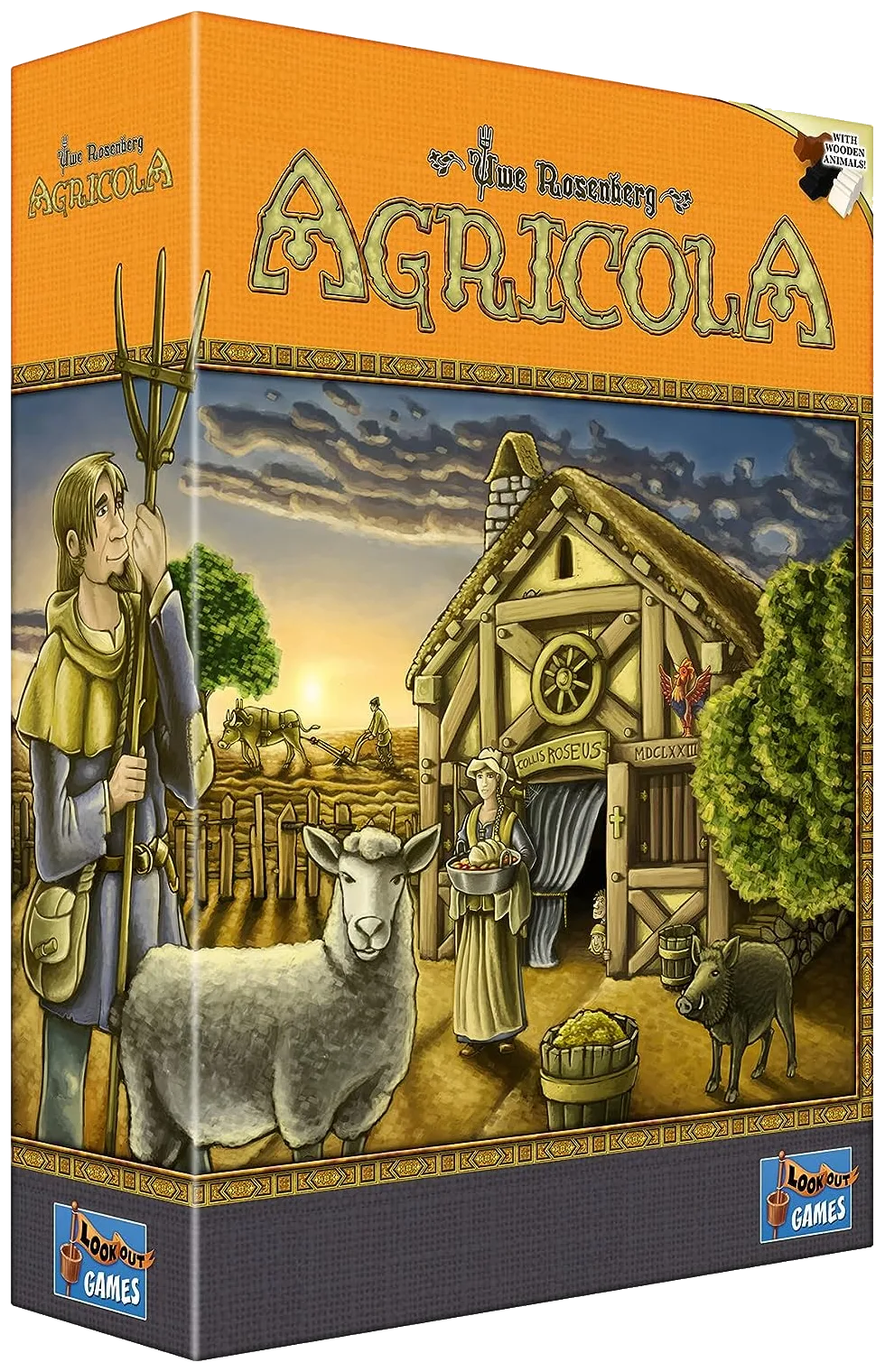
Description from BoardgameNews In Agricola, you're a farmer in a wooden shack with your spouse and little else.
Core mechanisms
Key systems that shape the decisions players make.
Closed Drafting
Choose from hidden cards or items before passing or revealing the remainder.
Hand Management
Time and sequence a limited hand of cards to preserve future options.
Automatic Resource Growth
Resources increase automatically when defined rounds or conditions are reached.
Enclosure
Surround spaces or pieces to claim territory, capture, or score.
Rising Resource Values
Resources become more valuable when players repeatedly leave them unselected.
Read the full game description
Description from BoardgameNews In Agricola, you're a farmer in a wooden shack with your spouse and little else. On a turn, you get to take only two actions, one for you and one for the spouse, from all the possibilities you'll find on a farm: collecting clay, wood, or stone; building fences; and so on. You might think about having kids in order to get more work accomplished, but first you need to expand your house. And what are you going to feed all the little rugrats? The game supports many levels of complexity, mainly through the use (or non-use) of two of its main types of cards, Minor Improvements and Occupations. In the beginner's version (called the Family Variant in the U.S. release), these cards are not used at all. For advanced play, the U.S. release includes three levels of both types of cards; Basic (E-deck), Interactive (I-deck), and Complex (K-deck), and the rulebook encourages players to experiment with the various decks and mixtures thereof. Aftermarket decks such as the Z-Deck and the L-Deck also exist. Agricola is a turn-based game. There are 14 game rounds occurring in 6 stages, with a Harvest at the end of each stage (after Rounds 4, 7, 9, 11, 13, and 14). Each player starts with two playing tokens (farmer and spouse) and thus can take two turns, or actions, per round. There are multiple options, and while the game progresses, you'll have more and more: first thing in a round, a new action card is flipped over. Problem: Each action can be taken by only one player each round, so it's important to do some things with high preference. Each player also starts with a hand of 7 Occupation cards (of more than 160 total) and 7 Minor Improvement cards (of more than 140 total) that he/she may use during the game if they fit in his/her strategy. Speaking of which, there are countless strategies, some depending on your card hand. Sometimes it's a good choice to stay on course, and sometimes it is better to react to your opponents' actions...